
The rivalry between Guangdong and Beijing heats up at Wukesong, Beijing’s home court, as the two teams clash in a pivotal playoff game. The series has already been fiercely contested, with the first game seeing Beijing’s sharpshooting dismantle Guangdong’s zone defense. The home team hit 16 of 29 three-pointers, a staggering 55% clip, led by Zeng Fanbo’s 7-for-5 performance for 23 points, leaving Guangdong little chance.
However, Guangdong turned the tables in Game 2 at their home in Dongguan. They exploded for 19 three-pointers, with Quinn scoring 39 points on 12-of-18 shooting, while Hu Mingxuan came off the bench for 23 points on 9-of-13 from the field. The game went to overtime, ending in a 102-99 victory for Guangdong, sealed by Zhang Haojia’s buzzer-beating three-pointer that sent the home crowd into a frenzy.
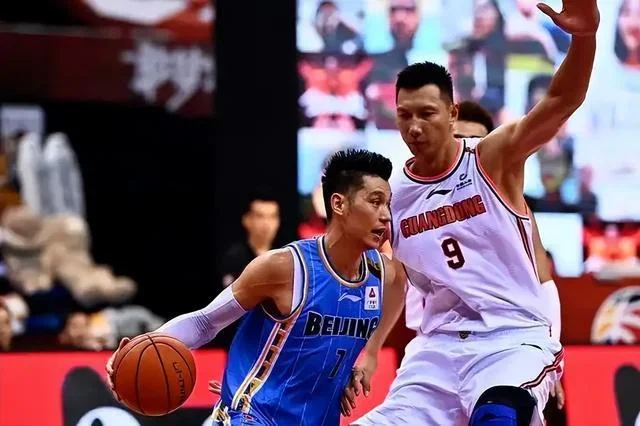
Du Feng’s adjustments were key. He decided to break up the starting backcourt duo of Hu Mingxuan and Xu Jie, moving Hu to a sixth-man role to exploit Beijing’s weaker bench defense. Defensively, Guangdong switched to tight man-to-man coverage, limiting Beijing’s outside shooting space, while rotating big men Lakosevic and Salinger to wear down Beijing’s interior players like McGee and Zhou Qi.
The offensive focus shifted to hot-handed shooters Hu Mingxuan, Du Runwang, and Zhang Haojia, reducing Xu Jie’s three-point attempts and marginalizing the struggling Cui Yongxi. These changes were based on a thorough review of the first two games: Game 1’s zone defense was shredded, but Game 2’s man-to-man approach cut Beijing’s starting lineup’s three-point shooting to just 4-of-14.
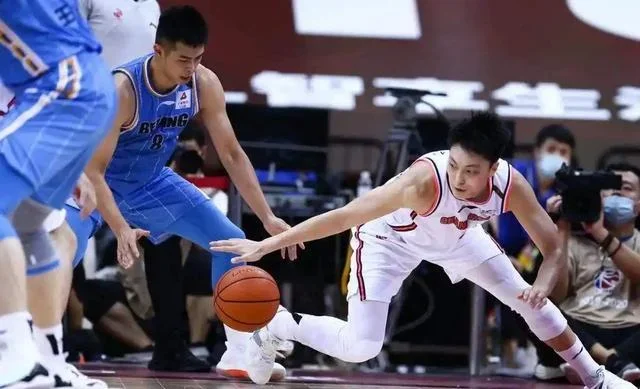
Du Feng also emphasized discipline, advising his players to avoid arguing with referees during timeouts, a lesson from a previous game where two technical fouls led to an ejection. His calm sideline demeanor helped maintain focus.
Beyond the scoreboard, the game carries deeper implications. Du Feng’s decision to split the backcourt was not impulsive. The simultaneous starts of Hu and Xu had created offensive overlaps and defensive vulnerabilities due to their similar height. By separating them, Xu orchestrates the offense while Hu provides a scoring punch off the bench, showcasing the essence of professional sports: rapid and precise in-game adjustments.
According to official CBA statistics, Guangdong averages 13.2 three-pointers per game (ranked sixth), while Beijing averages 11.8. Three-point shooting remains the critical variable. Young players like Cui Yongxi, who scored zero points in two games, highlight the adaptation challenges under playoff pressure.
The outcome directly impacts the playoff bracket. The winner advances to the semifinals to face the third-ranked team in the regular season, while the loser is eliminated. If Guangdong wins, they will meet Zhejiang; if Beijing wins, they face Liaoning, the second seed. This game’s result will reshape the entire semifinal landscape.

The electric atmosphere at Wukesong, combined with passionate traveling Guangdong fans, adds an extra layer of intensity. This clash is expected to be the highest-rated playoff game of the season on CCTV5, with potential viewership exceeding 10 million and the hashtag #GuangdongBeijingPlayoff trending with billions of reads. Whatever the outcome, this game is destined to be a classic chapter in CBA playoff history, with players leaving everything on the floor for an unforgettable showdown.