
Around 2015, the Shaanxi History Museum dropped a bombshell that caused quite a stir among historians and the public.
A team of experts extracted DNA samples from the Qin Dynasty era and compared them with modern genetic databases. The results were astonishing: some people today share genetic markers with the ancient Qin people at an over 70% similarity rate.
If this had been about any other dynasty, it might have been just a piece of trivia. But for the Qin Dynasty, it seemed almost impossible.
Looking back at history, the bloodline of Qin Shi Huang should have been wiped out long ago. In 210 BC, the First Emperor died suddenly at Shaqiu. Immediately after, Zhao Gao and Li Si forged an edict, forcing Crown Prince Fusu to commit suicide.
But that was just the beginning. After Qin Ershi (Hu Hai) took the throne, he was consumed by paranoia. He feared his siblings might rebel, so he launched a bloody purge. First, twelve of his brothers were executed in the streets of Xianyang. Then six more brothers and ten sisters were killed. Even the three brothers of Jiang Lü were imprisoned and forced to kill themselves. Even Qin Shi Huang’s grandson, Ziying, who eventually killed Zhao Gao, managed to survive until the fall of Qin but was later slain by Xiang Yu.
With such a massacre, theoretically, no direct descendants of Ying Zheng should have survived.
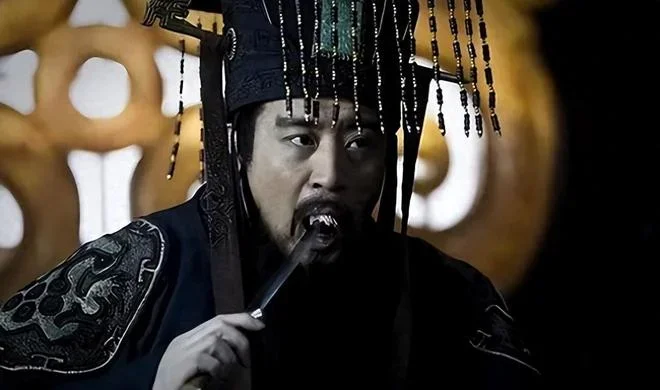
But fate often leaves a crack in the door. While the slaughter was happening, one of Qin Shi Huang’s sons, Prince Gao, made an unusual move. Realizing Hu Hai was already on a killing spree, Prince Gao knew escape would mean death for his entire clan. He instead wrote a memorial to Hu Hai, saying he missed his father so much he wished to die at the foot of Mount Li to serve the First Emperor in the afterlife.
This was a brilliant move. Hu Hai, delighted at the opportunity, approved and even awarded 100,000 coins. Prince Gao sacrificed his life to secure two things: a dignified death, and more importantly, Hu Hai’s implicit promise not to harm his wife and children. After Prince Gao’s burial, his family fled Xianyang with the fortune.
These survivors had to change their names to hide. Over two thousand years, their lineage evolved into four main surnames.
The first is Gao. This is straightforward: they used Prince Gao’s name. It honored the ancestor who sacrificed himself and served as a secret marker. Modern genetic studies show that many people with the surname Gao share genetic traits with those surnamed Zhao, hinting at connections.
The second is Zhao. Why Zhao? Qin Shi Huang himself was of the Ying clan but Zhao surname, sharing ancestry with the Zhao royal family. After the Qin collapse, the surname Ying became a death sentence. Zhao, being a common surname, allowed them to blend in. A 2018 paper in the *Journal of Human Genetics* noted that Qin Shi Huang’s Y-chromosome haplogroup appears frequently among Zhao-surnamed people.
The third is Qin. This was a bold move: using the dynasty’s name as a surname. Though Emperor Gaozu of Han was wary of the Qin people, he didn’t exterminate them. Those who kept the surname Qin mostly fled to remote mountains or northwest and central China. Later figures like Qin Qiong, a Tang dynasty general, were rumored to have imperial blood. Recent archaeological finds of Qin-era tomb inscriptions confirm the Qin surname survived.
The fourth is Feng. This is the rarest and most clever. It is said that the character for Feng was derived by splitting and modifying the character for Qin—changing the upper part and removing the lower part (meaning “grain”). This disguised their identity while preserving a hint of their origin. This change likely occurred among Qin people who fled south to areas like Hunan and Jiangxi. Some local gazetteers record that during the chaos at the end of Qin, southern migrants changed their surnames to Feng to avoid persecution.
However, let’s be realistic. Among the millions of people with these four surnames today, the chance of a direct bloodline to Qin Shi Huang is less than one in ten thousand. Over centuries, many outsiders adopted these surnames, and many families falsely claimed imperial ancestry to boost their prestige.
How can you tell if it’s real? Relying on family trees is unreliable. Modern technology offers better clues. In 2022, a new report on ancient DNA from the Terracotta Army pits showed astonishing similarities between genetic traits there and those of certain Zhao-surname groups in northwest China.
If you happen to have the surname Zhao, Qin, Gao, or Feng, and your ancestral home is around Shaanxi, you might just be a distant relative of the First Emperor.
But in the end, whether you’re a direct descendant matters less. In an era when life was cheap, the ability to survive through wisdom and sacrifice, and to keep a bloodline alive against all odds, is itself a remarkable victory.